
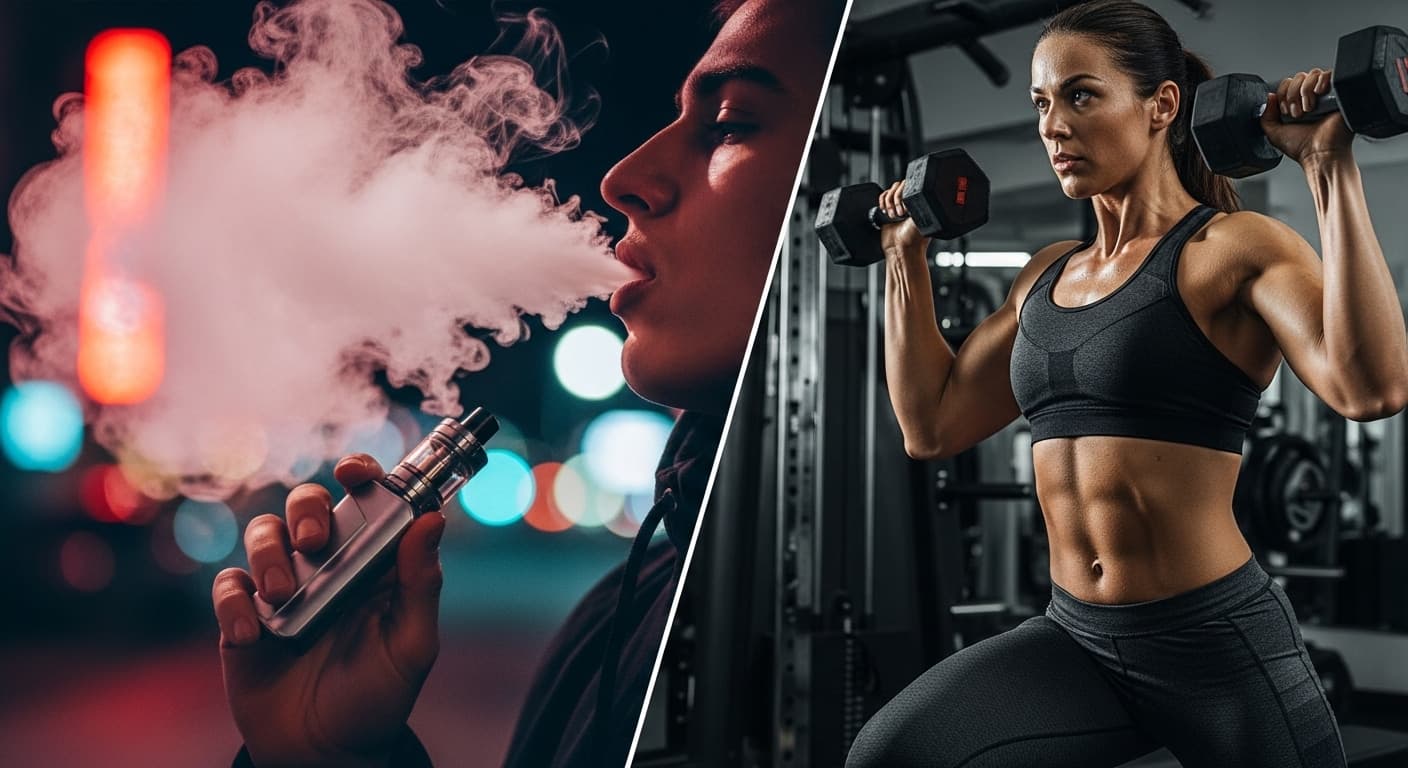
It’s the question nobody at the gym talks about openly, but thousands of people quietly Google every single week. You hit the treadmill at 6 a.m., meal-prep like a pro, track every macro and then take a pull from your vape on the drive home. Does that undo everything?
The short answer is: it’s complicated. Vaping and fitness aren’t necessarily enemies, but they’re not exactly best friends either. The real picture depends on what you vape, how often you use it, and the kind of training you do. Let’s break it down honestly no scare tactics, no sugarcoating.
What Actually Happens to Your Body When You Vape Before a Workout?
When you inhale vapour, nicotine enters your bloodstream within seconds. That triggers a short spike in heart rate and a temporary narrowing of your blood vessels. For someone about to do a heavy squat session or a 5K run, that means your cardiovascular system is already working harder before you’ve even warmed up.
Your body relies on efficient oxygen delivery during exercise. Nicotine-related vasoconstriction can reduce that efficiency, which may leave you feeling gassed out earlier than expected. It’s not dramatic for a casual gym-goer, but if you’re chasing personal records or training for endurance events, you’ll notice the ceiling.
That said, the impact of vaping is measurably lower than combustible cigarettes. There’s no tar, no carbon monoxide, and significantly fewer toxicants entering your lungs. For people who switched from smoking to vaping, lung function and exercise tolerance often improve within the first few months.
Does Vaping Wreck Your Lung Capacity Over Time?
Lung capacity is where most fitness-focused vapers get concerned, and rightfully so. Your VO2 max the maximum amount of oxygen your body can use during intense exercise is arguably the single most important metric for cardiovascular performance. Anything that chips away at it matters.
Current research suggests that while vaping does cause some level of airway irritation, it doesn’t degrade lung function at anywhere near the rate that traditional smoking does. A 2022 study published in the Journal of the American Heart Association found that exclusive vapers showed only minimal reductions in FEV1 (forced expiratory volume) compared to non-users, while smokers showed significantly more decline.
So if you’re someone who transitioned away from a traditional tobacco shop purchase say, a pack-a-day habit and moved to a lower-nicotine vape, your lung capacity is likely in a much better place than it was a year ago. The key takeaway here isn’t that vaping is harmless; it’s that context and comparison matter enormously.
Nicotine, Metabolism, and the Gym Bro Myth
Here’s where it gets interesting. There’s a persistent claim floating around fitness forums that nicotine is actually a performance enhancer a thermogenic that boosts metabolism and suppresses appetite. And technically, that’s partially true. Nicotine does increase your basal metabolic rate slightly, and it can blunt hunger signals.
But calling it a “performance enhancer” is a stretch. The metabolic bump is modest — roughly 7–15% for a short window after use and the appetite suppression comes with a trade-off: it can also suppress your motivation to eat enough to fuel recovery and muscle growth. For anyone doing strength training, that’s counterproductive.
The smarter play? If you’re going to vape, time it well. Most fitness-conscious vapers report better sessions when they avoid nicotine for at least 30–60 minutes before training and stay hydrated throughout their workout. Post-workout vaping is generally less disruptive to performance, though recovery hydration should still come first.
Smarter Choices for Vapers Who Take Fitness Seriously
If you’re not ready to quit nicotine entirely but you want to minimize its impact on your training, there are a few practical moves you can make right now.
First, consider stepping down your nicotine strength. Many vapers start at 50mg salt nic and never revisit it, even though their tolerance and habits have changed. Dropping to 20mg or even 10mg can meaningfully reduce the cardiovascular load without killing the experience.
Second, invest in quality. Not all devices and juices are equal. A reputable one stop smoke shop that carries lab-tested e-liquids and trusted hardware brands makes a difference. Cheap, unregulated products can contain impurities that cause additional respiratory irritation the last thing your lungs need before a HIIT session.
Third, prioritize your breathing practice. Dedicated breathwork even five minutes of diaphragmatic breathing before your warm-up can offset some of the airway tightness vapers occasionally experience. It’s free, it’s backed by sports science, and it genuinely works.
The Bottom Line — It’s About Balance, Not Perfection
Fitness culture loves absolutes. Eat clean. Train hard. No excuses. But real life is messier than that, and most people exist somewhere between a perfect health routine and a destructive one. If you vape and you train, you’re not broken you’re human.
The evidence shows that vaping is not without risk, but it’s a significantly reduced-risk alternative to smoking, and it doesn’t have to derail your fitness goals if you approach it with awareness. Stay informed, listen to your body, choose quality products, and don’t let anyone make you feel like you can’t be both a vaper and an athlete.
Ready to make smarter choices about what you vape?
Visit our head shop at any Vape Vibes location across Texas Arlington, Mesquite, Dallas, Wichita Falls, or Tyler and let our team help you find lab-tested, premium-quality vapes, e-liquids, and accessories that fit your lifestyle. Walk in, talk to our staff, and experience the Vape Vibes difference for yourself.